
G&P: Abbreviation for GAMES AND PUZZLES MAGAZINE.
Game delay: See HOLDOVER.
Game End Date (GED): The stage of a game when it will end unless it finishes before then.
Game Manager: Alternative name for GAME MASTER.
Game Master: Someone who organises, runs and oversees a game of Diplomacy.
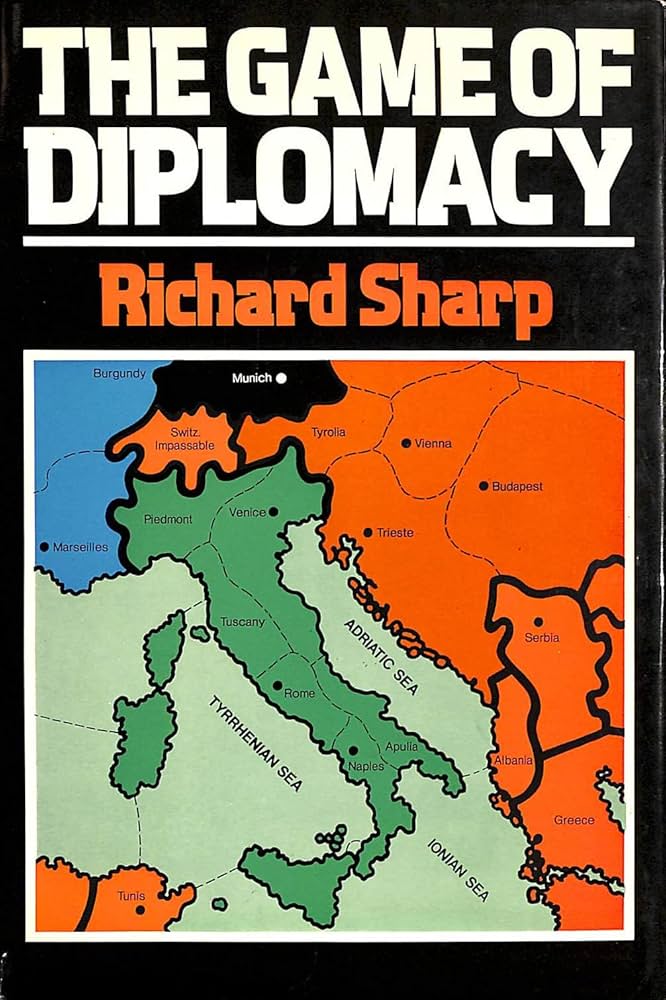
Game of Diplomacy, The: Book written by Richard Sharp about playing Diplomacy. Published in 1978.
Game Report: When a Dip game is run by a GM, this is a published update of the game once a set of orders have been adjudicated.
Gamer’s Guide to Diplomacy, The: Originally published in 1978, this was a publication that described how to play the game, had articles on playing the powers, discussed the Hobby, etc. Revised in 1979. A new edition was published in 1993.
Games and Puzzles Magazine (G&P): Not strictly a Diplomacy publication but printed a lot of Diplomacy content, including from Allan B Calhamer himself.
Games Research Inc: The company that published Diplomacy from 1960 onwards.
Gamestart (1): The start of the game, before Spring 1901.
Gamestart (2): The information given to players in a game of Diplomacy, including the power they’re playing, the other players in the game, etc that allows them to take part in the game.
Game Summary: When a Dip game is run by a GM, this is a published report at the end of the game, often featuring EoGs (or AARs) from the players.

GED: Abbrev for GAME END DATE.
General, The: Zine published by Avalon Hill. Often published issues which were very much about Diplomacy, but not a dedicated Dip zine.
Genzine: A Dipzine that doesn’t run Dip games.
Gibraltar Axis, The: On the Diplomacy board this is at the western end of the Mediterranean. Here there is a point (not a point really but anyway) where the Mid-Atlantic Ocean meets the Western Mediterranean Sea, with Spain to the north and North Africa to the south. This is the Gibraltar Axis. It is the point at which a power can break through to the Atlantic or Mediterranean and is a natural blocking point to prevent this.
Glee: The feeling of seeing that the player you stabbed was also stabbed by another player.
Gloating: Reaction to seeing the player who pulled off a terminal stab against you getting eliminated.
GM: Abbrev for GAME MASTER.
Golden Age: Two separate eras in which Diplomacy saw a huge growth. According to the Diplomacy A-Z the first Golden Age was 1971-3 in North America when there was an explosion of zines and “some of the most creative articles, commentary and zine design were produced.” Then again in following Avalon Hill’s ownership of the game: “Over the next few years some of the best zines ever appeared.” These zines were bigger, using readily available tech to produce them. Ended with THE GREAT FEUD. My own thoughts are that the growth of the Hobby since it’s moved online – the DIGITAL AGE – is, perhaps, another ‘Golden Age’ that many ignore.
Good Ally: The philosophy of, or way of playing as, a strong ally to one or more players until you have the chance to end the alliance and try to win the game, usually without your ally’s agreement.
Goodbye Charlie: A system by which some GMs, when faced with a Spring 1901 NMR, kicked the player from the game and brought in a replacement player. See SPRING 1901 PROTECTION.
Grace Period: In some HOUSE RULES or SITE RULES, if a player NMRs (fails to get their orders in by the deadline) they are given a period of time to rectify this error. This may or may not be extended to other players, depending on the site rules. Strictly speaking, though, a Grace Period is only offered to the NMRing player, given that other players haven’t had their orders revealed. See PROTECTED GAME.
Grand Alliance: An alliance of surviving players seeking to prevent another player from winning a game of Diplomacy. Also known as the STOP THE LEADER (STL) alliance. Grand Alliance is much better, even if less descriptive, as it recalls such alliances from European history.

Graustark: The very first Diplomacy zine, first published in May 1963 by John Boardman. Ran until April 2010.
Great Feud, The: A long-running feud across the North American Hobby that involved a number of personalities, drew in a lot of zines, and caused a great chasm in the Hobby. The reason for the feud doesn’t really matter any more. Too many egos.
Grey Press: Messages sent from one player to others that are anonymous.
Guillotine Alliance: An alliance featuring England, Germany and Italy. Named because it aims to cut of France’s head.

Gunboat Diplomacy: Diplomacy without the communication (so, yeah, not Diplomacy). Despite the fact that Diplomacy is about diplomacy, this non-diplomacy variant has become very popular, due to games moving quickly. Effectively, it’s Diplomacy as played as if it were Chess, with seven players (or however many players are in the specific variant). Ideally, the game should have no communication between players at all. However, online, given that sites allow draw proposals to by published, these can be used as a way to communicate. Otherwise, players have found ways to communicate offers of support by issuing orders.
 THE DIPTIONARY