
AAR: See AFTER ACTION REPORT.
Abandoned game: In the Postal Hobby, games which never come to a final conclusion. No longer in use.
Abandoned power: A power that is not controlled by any player. See CIVIL DISORDER.
Abomination: A 2-player draw. A 2-player draw means that neither player has even tried to win the game. Instead they’ve decided to throw out the objective of playing Diplomacy in favour of manufacturing a result where they finish on 17 SCs each. A truly horrifying way to play Diplomacy.
Academy of Creative Destruction: Online forum for playing Diplomacy by email. To play in the ACD you have to be a committed player, by which I mean dedicated (rather than spending your time bumping off soft, comfy walls). Although …
ACD: See ACADEMY OF CREATIVE DESTRUCTION.
Adjudication (1): The resolution of each player’s orders.
Adjudication (2): The act of resolving each player’s orders.
Adjudication Phase: Where it is separated from the Diplomacy Phase, the part of the game where orders are resolved. The time when you find out that your ally did the dirty.
Adjustment(s): Orders issued whereby players have to remove units from the board if they own fewer Supply Centres than units on the board, or build new units if they own more SCs than units on the board.
Adjustment(s) Phase: Alternative name for a Winter Turn; the part of the game when Adjustments are made. Often optimistically referred to as the Builds Phase.
After Action Report: Another name for an END OF GAME STATEMENT.
Albion: The first UK ‘diplomacy zine’ (really a wargamer’s zine) published by Don Turnbull. Issue 1 appeared in August 1969 and issue 50, the last, in January 1975.
Alliance: Two or more players working together in a game of Diplomacy.
Alliance Player: A Dipper who aims to use alliances to get the most from the game, such as a BLOOD PACT player, a GOOD ALLY, or a CAREBEAR.
Allocation (1): A way of deciding which powers each player should play.
Allocation (2): The power you have been given to play.
Ally (1): A member of an alliance, allegedly.
Ally (2): Someone who has, unfortunately, misheard what you said and therefore misunderstood what was expected of them.
Ambassador (class): On Playdiplomacy, players with a high reliability rating.
Ambassadors Only game: On Playdiplomacy, a game that could only be entered by players with high reliability.
Anarchy: The state of a power that has been abandoned (see ABANDONED POWER).
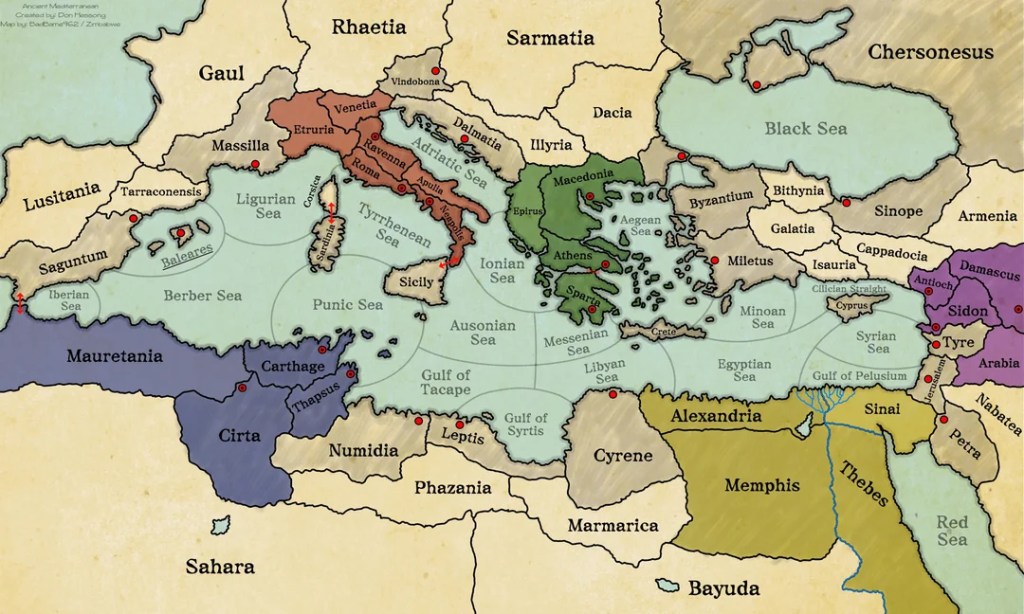
Ancient Mediterranean: A variant of Diplomacy set in the Classical era, based around the Mediterranean Sea. There are five powers in this game: Rome, Greece, Persia, Egypt, and Carthage.
Anglonaut Alliance (1): Alliance featuring England, Russia and Turkey. Named by adding Anglo (=England) with ‘naut’ from Juggernaut, the name for the Russo-Turkish alliance.
Anglonaut alliance (2): Alternative name for the VIKING ALLIANCE.
Anonymous game: A game in which players do not know which player controls which power. More generally, a game in which you don’t know who you’re playing against.
Anonymous players game: A game in which players don’t know who else is in the game.
Anxiety: The feeling of watching other players huddling in corners, disappearing to other rooms, or entering lavatories too small to house them all.
Arena Diplomacy: A game of Diplomacy that is part of a League or Tournament. Usually highly competitive, as opposed to a regular ‘fun’ game of Diplomacy that is just competitive.
Arena event: Term that might be used for a League or Tournament. If you actually start using it.
Arena Game: A game of Diplomacy that is part of a Tournament or League.
Armoured Duck: A player who continues along a given plan in a game, regardless of the consequences. Alternatively, as other players in the game might use, an idiot.
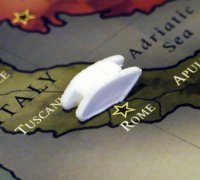
Army: A playing piece in the game Diplomacy that can only move on land.
Army-heavy policy: A way of playing Diplomacy that sees a player building more armies than fleets.
Arranged standoff: An agreement between two or more players to bounce in a given space to either defend the space or to maintain a buffer zone between them.
Attack (1): The move of a unit from one space to another, when the destination space is occupied or when another unit is moving into the same destination space.
Attack (2): The collective strength of a unit moving from one space to a neighbouring space and any units ordered to support that unit.
Attacking force: See ATTACKING STRENGTH.
Attacking strength: Sum of all units involved in an attack on a space.
Auto_Surrendered: On Playdiplomacy, to be removed from the game. This happens automatically if you NMR twice in a game or, if the game has SPRING 1901 NMR PROTECTION in place, if you NMR in a Spring 1901 Movement Phase.
 THE DIPTIONARY